
05 Unity College, Caloundra
Listening before redesign: seeing Year 10 through student signals.
The Presenting Challenge
Many schools reach a point where they start asking whether a particular year level is working as intended. At Unity College, that question centred on Year 10. Leaders and teachers were noticing patterns that felt familiar across many secondary settings: students coasting, disengagement creeping in, motivation dipping. There was also a growing sense that Year 10 had become something it was never deliberately designed to be — a holding space between junior and senior schooling. At the same time, the school was exploring possibilities for innovation. They were looking for something that might re-energise the experience for students and differentiate their offering. Ideas were emerging, but there was also an awareness that solutions designed only from adult perspectives risked missing what mattered most. Instead of moving straight into program design, the school chose to pause and listen more deeply. The team started by asking a fundamental set of questions. What is the purpose of Year 10? What signals are we actually seeing from students? Why are we seeing them? And critically: do we see the same things students see?
Those questions do not have quick answers. Sitting with them before moving to solutions is a design decision in itself. It is also, in most schools, the harder choice.
Starting with Experience, Not Assumptions
The first phase of the Design Track is always empathy work. Before any design decisions are made, the work focuses on understanding how the school is actually experienced by the people inside it.
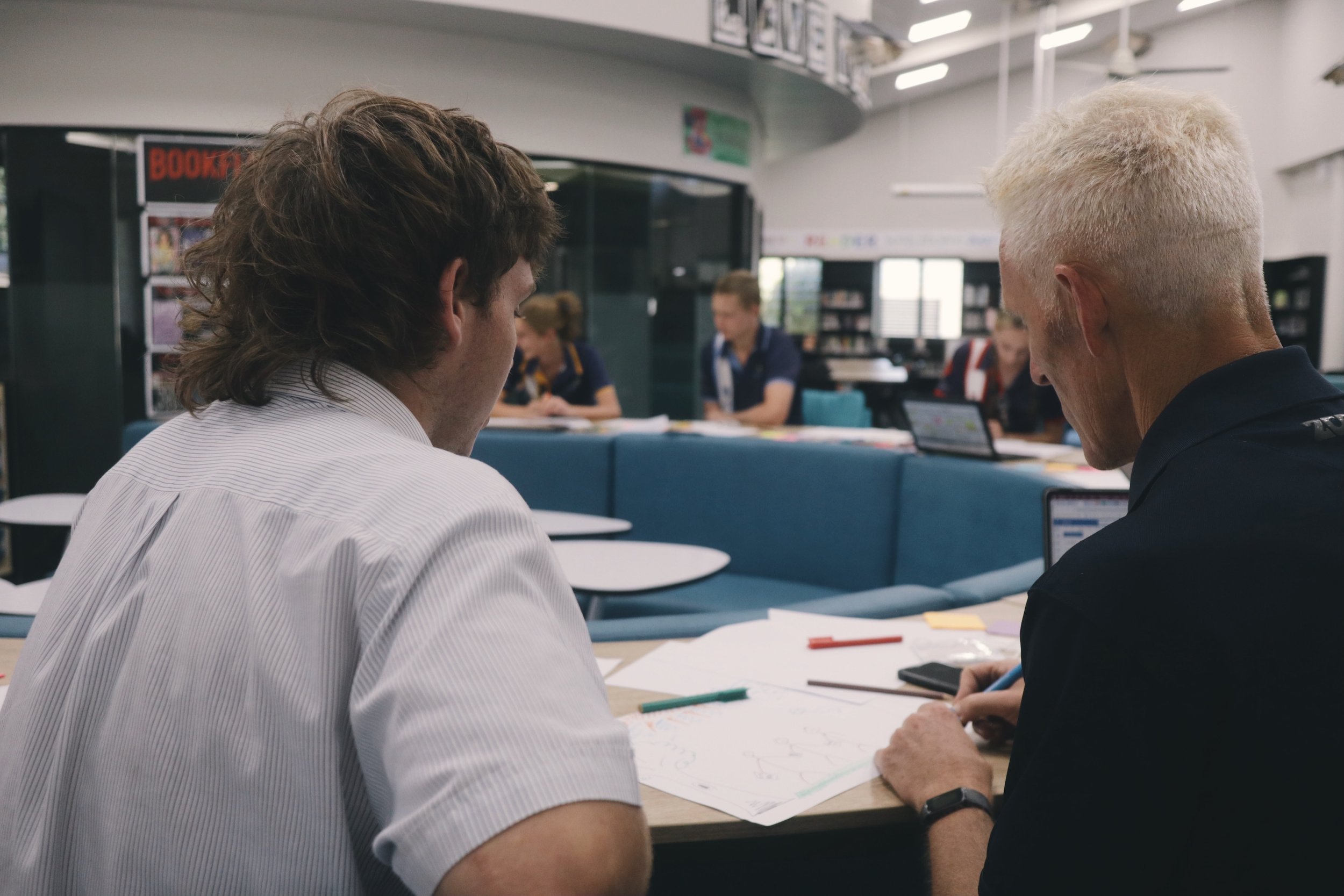
Twenty-seven students, teachers and leaders participated in open conversations exploring how Year 10 was experienced: what worked, what did not, where barriers existed, and what a more meaningful year might look like. The interviews were structured but open.The goal was not to confirm existing hypotheses. It was to surface the signals the system was already producing. Participants were invited to reflect on agency, choice, aspirations and possibilities, including the simple but powerful “magic wand” question: if you could change Year 10, what would you create?
What emerged was not a set of complaints. It was a pattern of genuine insight. Across groups there was strong alignment about what mattered most: relationships, agency, clarity of purpose, and learning that felt relevant and real. Several signals became visible and consistent across the data. The importance of teacher-student relationships in shaping engagement. The value students placed on having genuine choice. The capacity students demonstrated when invited into meaningful conversation about their own learning.
This last signal was the most significant. Agency was not absent. It appeared when the system created space for it.
From Signals to Design
The empathy data was synthesised into a set of emerging design principles to guide future work. Rather than prescribing solutions, the principles clarified what needed to be made more likely in a strengthened Year 10 experience. This is the second phase of the Design Track: problem definition grounded in evidence, not assumption.
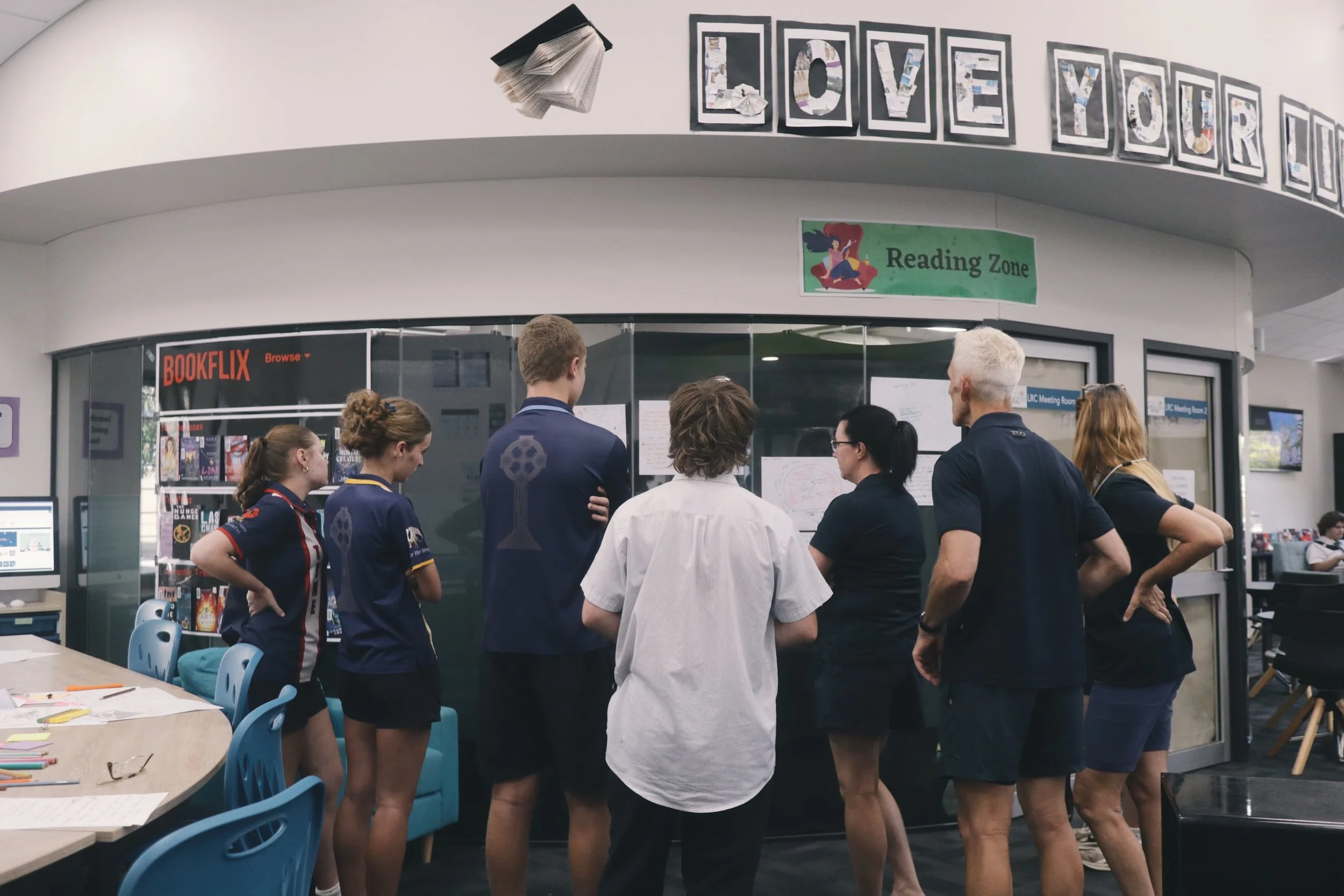
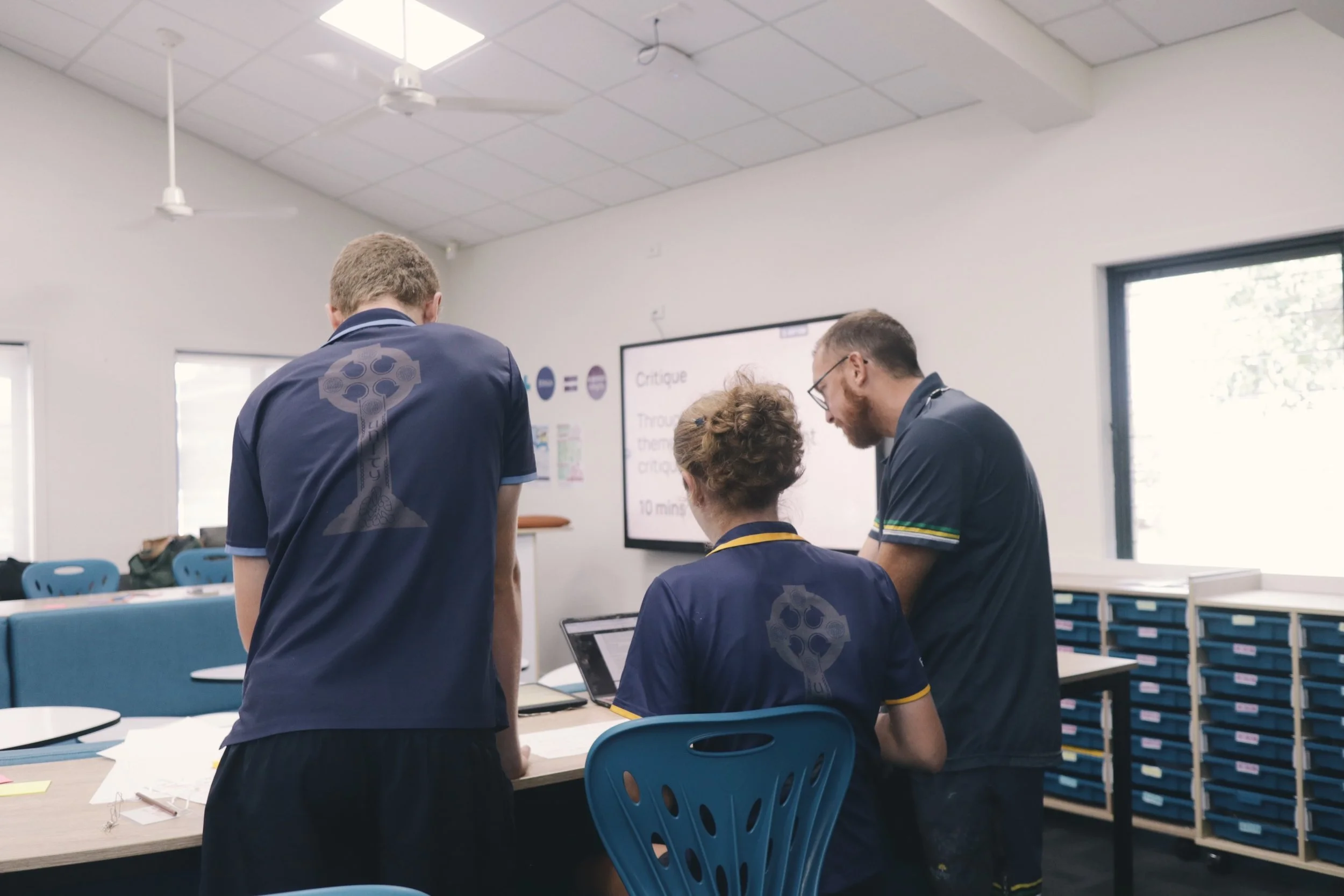
The discovery phase culminated in a co-design workshop bringing students, teachers and leaders together in a significant moment. Students were not simply providing feedback on lessons. They were unpacking structural challenges: compliance cultures, relationship dynamics, timetable constraints, and what agency might actually look like in practice. They were thinking alongside educators about what a better Year 10 could look like.
Following the session, one teacher reflected on the depth of thinking they witnessed in students. A student shared:
“I had no idea how my ideas and honest opinions would be received, but I was surprised to hear that teachers see the challenges too. It’s good knowing we’re all on the same side.”
What became visible in the room was something more than consultation. It was ownership. When students were invited into the design space, many demonstrated the very agency the school was hoping to cultivate.
The process was described by the project team as both inspiring and thought-provoking, prompting meaningful reflection among students and staff. Students and staff responded positively to an approach that was inclusive and relational, and that made the purpose of each step clear.
This is a pattern that appears consistently in Design Track work. The conditions schools are trying to create in students often begin to emerge inside the design process itself.
What This Revealed
One of the most significant outcomes of the empathy phase was a fundamental shift in how the school understood its own data. What had initially appeared to be surface-level issues were revealed to be symptoms of deeper, systemic barriers embedded in how the school operated.
Students were navigating fragmented learning experiences that lacked a clear through-line between curriculum intent, classroom practice, assessment, and post-school pathways. Learning often felt disconnected from their identities, futures, and lived experiences. As a result, students struggled to see relevance or purpose, even when content was well designed and teachers were highly committed.
“Disengagement was not primarily a student deficit problem. It was a system problem.”
Amanda Paton, Pathways Leader — Unity College
This reframe matters. When disengagement is read as a student characteristic, schools respond with interventions targeted at students. When it is read as a system output, schools ask different questions: what is the architecture producing, and what would need to change?
That shift, from fixing students to designing systems, is at the core of what the Design Track makes possible. It does not come from a workshop. It comes from sitting with what the data is actually saying.
Current State
Following the discovery phase, Unity College entered a period of shifting strategic priorities. This is a common dynamic in complex organisations. Insight does not always translate immediately into action. Sometimes the work of a discovery phase is to surface what the school is ready to design, and to hold that clarity until the conditions allow movement.
The insights generated through this process have continued to inform planning. Leaders retained a clear commitment that any future directions for Year 10 remain grounded in what students and staff actually experienced, not what the school assumed they experienced.
Why Discovery Matters
Schools are routinely asked to respond to student signals without first understanding what those signals mean. Attendance data, engagement surveys, behaviour patterns, Year 10 drop-off rates: these are all signals. The Design Track begins by taking these signals seriously. Not by moving immediately to programs, interventions or initiatives, but by doing the harder work of understanding what the system is producing and why.
When schools listen deeply before designing solutions, they position themselves to make more intentional decisions. The Unity College discovery phase did not produce a program. It produced clarity. And clarity, in a complex system, is where design work and deeper interventions that benefit the whole system become possible.
When asked what they found valuable about the process, the project team's response was simple: everything.
"Working with Coherence Co‑Lab fundamentally shifted how we understood our school data . What initially appeared to be surface‑level issues, were revealed to be symptoms of deeper, systemic barriers embedded in how our school operated. I would encourage [other school leaders and teams] to trust the process. Meaningful, deep change is inherently challenging and can feel uncomfortable but clarity emerges through the work . By committing to the process with openness and courage, the change takes shape in informed and purposeful ways."
Amanda Paton, Pathways Leader — Unity College