
03 Adolescent Success Symposium
The Coherence Challenge: Human-Centred Systems Thinking for Learning
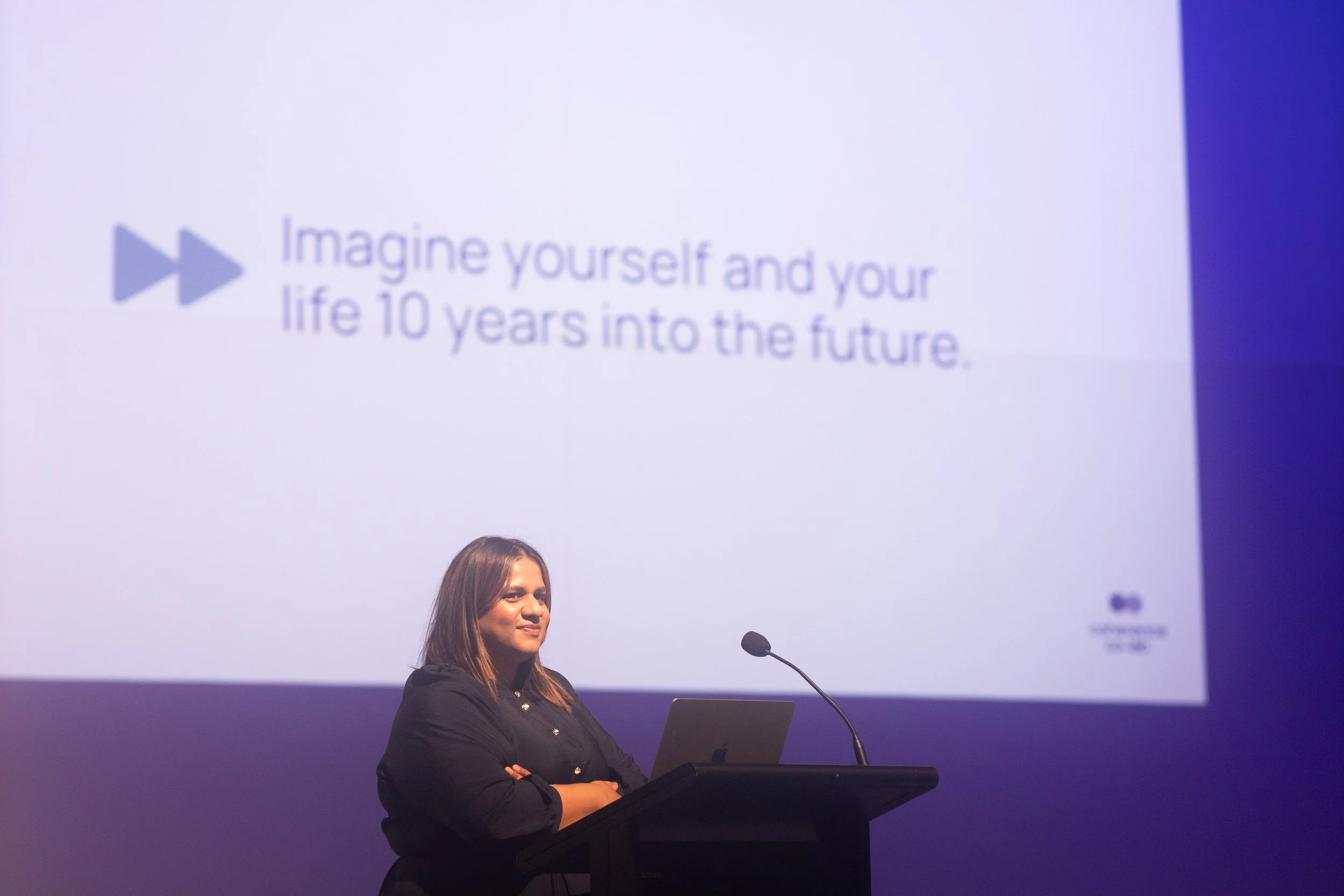
The Challenge
In periods of increasing uncertainty, the instinct in schools is often to move faster. New initiatives are introduced, programs are layered onto existing structures, and leaders search for approaches that might help young people navigate a future that feels difficult to predict. Yet as systems accelerate without alignment, fragmentation often increases for both educators and students. The pace itself can begin to undermine the very outcomes schools are hoping to achieve.
This keynote began with a premise that can feel counterintuitive in complex times. Slowing down to ask why may be one of the most important leadership moves available. Coherence is not something that becomes relevant once stability returns. It is most needed when conditions are uncertain and changing, when the temptation to react is strongest, and when the consequences of misalignment are most visible in the daily experiences of young people.
Participants were invited to consider the tension that many schools are currently holding. Futures thinking is essential because it allows communities to imagine possibilities and prepare students for multiple pathways ahead. At the same time, educators are navigating the demands of the present, including competing priorities, shifting expectations, and the relational work of supporting adolescents during a period of rapid development. When new ideas are taken up in isolation, the result is rarely innovation. More often, it becomes fragmentation that weakens clarity, purpose, and engagement.
The challenge therefore is not choosing between innovation and stability. The challenge is coherence.
Three tools for navigating complexity
The keynote introduced three complementary lenses that support leaders to navigate complexity in more intentional ways. Systems thinking invited participants to see how structures, relationships, and decisions interact to shape both student and educator experience. Futures thinking supported awareness of emerging possibilities while maintaining clarity about present purpose and values. Adaptive leadership provided language for recognising when challenges require shifts in beliefs, behaviours, and culture rather than technical solutions alone.
Together, these lenses created a way of understanding change that moved beyond implementation toward design. The middle years were used as a focal point because they often act as a microcosm of wider system dynamics. During this phase, developmental change, identity formation, and motivation intersect with school structures in ways that make coherence particularly visible. When alignment strengthens, students are more able to make sense of their learning and their place within it. When alignment weakens, disengagement can emerge even when intentions are positive.
What emerged
Rather than receiving a model to apply, participants engaged in reflection on their own contexts through multiple lenses. Leaders examined the signals present within their schools, including patterns in student engagement, educator workload, initiative layering, and community expectations, and considered what these signals might be pointing to beneath the surface. They were then invited to imagine the futures they hoped to create for young people before returning to their present systems to explore the alignment between intention and experience.
A significant part of the conversation centred on distinguishing technical challenges from adaptive ones. Issues such as artificial intelligence, curriculum change, and emerging technologies are often framed as problems that can be addressed through tools or policies.
Courage and leadership
A central theme throughout the keynote was the role of courage in leadership. Drawing on the work of Brené Brown, participants explored the tension between comfort and courage in times of uncertainty. Leading coherent change often requires questioning established assumptions, confronting areas of misalignment, and tolerating ambiguity long enough for new understanding to emerge. These moments can feel uncomfortable, yet they are often necessary if systems are to evolve in ways that genuinely support young people.
The invitation offered to leaders was both simple and demanding. Comfort and courage rarely coexist over sustained periods of change. Choosing coherence frequently involves stepping toward uncertainty in service of something more meaningful for students and communities.
The role of keynote experiences in this work
Experiences such as this create opportunities for collective reflection across systems. They allow leaders to step outside immediate pressures, recognise structural dynamics, and reconsider how change is approached within their contexts. In many cases, this kind of reflection becomes the beginning of deeper redesign work rather than a standalone event.
Preparing young people for an uncertain future is not primarily about adding more programs or innovations. It is about designing learning environments that are coherent, human, and purposeful so that students are able to navigate complexity with confidence and agency.
This keynote later informed an article published by Marian in the Australian Journal of Middle Schooling in late 2025, which expands on the ideas explored in the session and their implications for leadership and practice.